Sunday, March 27, 2011

As Easy As ABCD

 ARGUMENT:

This weeks blog focuses on TIM WISE the author of Between Barack and a Hard Place and his argument that racism is still very prominent in today's society and that the next big change in racism has arrived. It also focuses on Bob Herbert and his article in the New York Times which he argues that whites and people of Black and Hispanic heritage are still UNEQUAL in today's society.

You might be wondering why the title of this blog is "as easy as ABC" well because realizing that racism exist is as easy as ABCD and FIXING the problem is even easier.


A ccept
B lacks and
C hange the views of
D iscrimination

I'm not really sure why I thought of this acronym, but when you think about it, fixing discrimination is just that easy! Discrimination can simply be put as the unfair treatment of a race, so why can't be fair to this race?

Tim Wise talks about his new book and his findings of how racism still exists, maybe not as prominently as 50 years about but it still exists non the less. He says that there are two types of racism: 1.0 and 2.0. Racism 1.0 is the racism of Martin Luther King's time where there were signs specifically separating Whites from Blacks, different education types, or the racism that puts whites far above blacks thinking they were inferior (not to say that isn't seen now a days though either). Racism 2.0 (Wise says) is "transcending race from black or brown norm. WHAT does that mean? Well transcend means to go above, so what Wise is saying is that racism today is whites become "comfortable" with blacks or browns that go above their own race. Whites accepted Obama because he wasn't like the average "blacks" that most White people view as being less intelligent, more aggressive or prone to be apart of crimes, and not as hard working as Whites and more likely to live off welfare. Wise states how these stereotypes are the basis of today's racism. People are comfortable with Obama being black because a) he had years to prove his experience and intelligence and b) because he also has a parent who is White. The big question that struck me was can an average person of color amount to something the way an average white could? In today's society, white Americans might not even know that this racism exists but they still think less of black American's and it is seen in places of business, jobs, etc. Because of Barack Obama coming into Presidency, the new standard is that all people of black origin need to be truly exceptional in order to achieve anything now.

Bob Herbert's article states "The election of Barack Obama has not made true integration any more palatable to millions of Americans". This coincides with Wise's book because you would think that Barack's election would help White American's accept Black American's but it is still not the case. Herbert's main argument is on the education of today's Black and Hispanic students. Most of these students live in poverty and "the best teachers tend to avoid such schools, expectations regarding student achievement are frequently much lower, and there are lower levels of parental involvement" This all impacts the student and therefore puts graduates in the position of being "less intelligent" as stereotypes may point out. Wouldn't make sense to focus more on these public schools than the schools with the best test scores and more privilege? The teachers that do end up teaching these students would be less than inclined to teach them the rules and codes of power. Delpit would fear the way that the teacher operates her classroom for these students. Herbert argues that students would perform better if they were in a school with peers of middle class (rather than a school of their own racial and ethnic integration). Isn't it interesting that there are schools mainly with black students and schools mainly of whites? Couldn't we say that this matches the segregation of schools 50 years ago? This really relates to Herbert's argument of Separate but Unequal. 

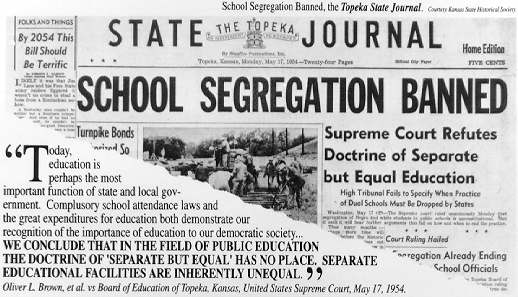
This one quote from Bob Herbert really shows the relationship between Brown vs. Board and today's issues:

"More than a half-century after the landmark Brown v. Board of Education school desegregation ruling, we are still trying as a country to validate and justify the discredited concept of separate but equal schools — the very idea supposedly overturned by Brown v. Board when it declared, “Separate educational facilities are inherently unequal.”
Schools are no longer legally segregated, but because of residential patterns, housing discrimination, economic disparities and long-held custom, they most emphatically are in reality."

 Take a look at the site of Brown vs. Board of Education:

"The current obsession with firing teachers, attacking unions and creating ever more charter schools has done very little to improve the academic outcomes of poor black and Latino students. Nothing has brought about gains on the scale that is needed."

The home page of this website shows two pictures. Notice that the white school has nice desks, pictures, a teacher and happy kids all in rows. The black school however has a heater right in the middle, no pictures, no desks, and not a teacher to be seen. Today, might not be as extreme but in my Service Learning area, I see some distinct differences from my middle class high school to their urban, poor school. This is happening today.

In class, I'd really like to discuss how this can be changed. How can we figure out why it is that people are poor, how can we split districts and maybe have kids from Providence going to a school like Barrington? How can we break the segregation happening today in schools even thought we supposedly broke those barriers years ago.
Saturday, March 19, 2011

What Can YOU Do For Your Country?

This weeks reading was "In The Service Of What? The Politics of Service Learning" by Joseph Kahne and Joel Westheimer

Extended Comments: 

I'm going to use Heathers Service Learning blog as the discussion of mine! Hope you don't mind Heather! Heather first started off by telling a story of a service learning project that she had done earlier in High School. What struck me is her statement of "it was good what we did but just a band-aid for the problem." I agree with her statement because we can do so many things for our country, our community, but if it's just us doing them, or our small group, the problem will keep coming back waiting for us to fix it again. If we raise awareness, then others, possibly everyone will get involved and be a better service to whatever task is at hand.

I also agree with how this Service Learning project has really impacted me far more than anything else. I was SO nervous my first day too but it all went downhill and now I'm so comfortable and actually am starting to love the kids I work with. I see such intelligence and hope and dreams and it makes me want to help them get to any place they want to be! I feel as though I didn't have a great understanding of other races than my own...or maybe I assumed all races were the same but being swallowed by a school that has a 9% white population, you realize that these are kids exactly as they are, a different race. I absolutely love it! The most important thing to me after reading In The Service of What was how am I really impacting them? How am I really serving them. Yes I guess this time is for me and is supposed to help me further my college credits and volunteer hours but I don't look at it that way. I am working with kids teaching them what I love. Heather talked about how her kids aren't ESL kids, they are her students...and I couldn't agree more! I don't look at my students and call them my African kids or Hispanic kids, they're my students and I'm serving them to the best of my ability, not for me but for them.

Through this service learning project, I think a lot about Jonathan Kozol and his book entitled Amazing Grace. I think about his interaction with a completely different culture and how he observes, he looks where no one wants to look in order to educate others of whats right down the street from them.

In class I'd like to discuss more ways that we can better service learning and how we can do more after this service learning project. I don't want it to end here, I know it won't but I want to work on everything about service learning.

Tuesday, March 8, 2011

Girls Can't Drive

One of the things we talked about today in class was how the media can portray males and females. Females are the damsels in distress and men are strong, able to conquer anything. In class, someone said how it was depicted (I believe in a show) how the girl was driving and the man was freaking out. She, of course, acted like a ditz with nothing in her head but credit cards and the best places to find sales on the latest fashions. I am here to tell you that I AM A GIRL AND I CAN DRIVE!!! Some might think less but how do you rate that? By how many tickets I've gotten? How many accidents? How many people honk at me? It seems like in society there are so many stereotypes for so many people but how do they come about? Did they do a survey of 10 girls and majority of them couldn't drive...but again how was that rated?

This whole conversation made me think about girls that would have to act like men to succeed in a job. This little girl came to mind:


After watching this video, I thought of something else: Whats wrong with getting married before having a job? I bet most of you think this is cute and adorable but society has rules about marriage you might not think about. In SCWAAMP, it accepted to be straightness, ESPECIALLY in marriage, but when you think deeper into marriage you think everyone that gets married should be 30 with a job and own some sort of property (whether that be an apartment or house) if not you're just crazy. Well folks, I'm clearly crazy then. I can't tell you how many looks I get when I say that I'm not even 21 and I'm married. "What? You can't be married, you need a full-time job, you're not ready" so many things people say to me. I find it amazing how much society has made a "rule" for every single detail in someones life so that they can live a more "normal" life. 

My question is can we do anything right and normal in society's eyes? Are we all doing something wrong and abnormal? In my opinion, the AB in ABNORMAL stands for ABSOLUTELY BEYOND NORMAL and I am therefore abnormal!!

Saturday, March 5, 2011

Snow White and the "Secret Education"

Argument: 

This author, Linda Christensen argues that there is a "secret education" that teaches children (through books, movies, television, and secondhand information feeding from parents, family, etc.) how society is "supposed" to be. Linda states "Our society's culture industry colonizes their minds and teaches them how to act, live, and dream. This indoctrination hits young children especially hard."

Her argument ultimately: Children are taught how to think about different races, classes, and situations at a very young age by watching cartoons/ movies. They are being controlled without even knowing. She says how "these messages, or 'secret education', linked with the security of their homes, underscore the power these texts deliver. As Tatum's research suggests, the stereotypes and worldview embedded in the stories become accepted knowledge." Children are never taught to question what it is they're watching. I sure never watched Snow white thinking "there are no black people in this movie" I just watched because it was my favorite childhood movie. After reading this article, it's amazing to me how much I have been influenced by the movies I watched as a kid. One of the things I loved the quote Christensen said in her article "Happiness means getting a man, and transformation from wretched conditions can be achieved through consumption-- in their (Cinderella's) case, through new clothes and a new hairstyle." What's crazy is for the most party, I BELIEVED THIS! You had to be pretty to get the prince, you had to HAVE a prince to be happy. It's amazing how just by watching this, a message is encrypted into your mind that you NEED a man to be happy! Poor guys don't stand a chance because all of the girls are looking for a prince charming, to sing to them, and to dance with them even when there's no music.

"True death equals a generation living by rules and attitudes they never questioned and producing more children who do the same". Children do as they are told...most of the time. Every now and then they'll lie about brushing their teeth but they believe what their extremely tall parents tell them because they "reign over them". What child would ever question what their parents say? Linda Christensen wants to teach them otherwise. She wants to tap on that glass and shatter the stereotypes in cartoons. She wants to rethink schools by first making the students rethink what is they have been taught. She asks them simple questions that they wouldn't think about. The solution to this problem: make them question the "societal norms" that we're taught so often at a young age.


Looking at the Disney Princesses and Princes, they have the same happy looks now that they are forever with their knight and shining armor. This is how all girls can look when they have the man of their dreams too. I've watched all these movies just like any girl would, and it put ideas in my head that I didn't even know that they were putting. Do you see anyone black in these pictures? Asian? How about poor and happy? They're ALL princes and princesses so clearly they have money, and a title. 

In class, I'd like to discuss how it is that this isn't noticed. How is it that people don't realize it? Some do, like Linda. Maybe people just don't question cartoons because they're supposedly "kid friendly". How can we decode this "secret education" further in schools? 

Saturday, February 26, 2011

GLSEN: Victimization of Students

Hyperlinks: 

I read an article on the GLSEN website entitled

Shared Differences Examines LGBT Students of Color Experiences in School

by Elizabeth M. Diaz
Joseph G. Kosciw, Ph.D.

This article really raised the issue of the victimization of students "who identify as people of color and LGBT" (personally I do not like the way that is explained a person of color, are they blue?) I feel that this is so important because bullying in these cases doesn't have to be just about sexual orientation, but could also be about race now too. 

This author raises the issue of just simple bullying because of race: 


  • More than half of African American/Black, Latino/a, Asian/Pacific Islander, and multiracial students also reported verbal harassment in school based on their race or ethnicity. Native American students (43%) were less likely than other students to report experiencing racially motivated verbal harassment.


  • Then bullying because of sexual orientation:


  • Across all groups, sexual orientation and gender expression were the most common reasons LGBT students of color reported feeling unsafe in school. More than four out of five students, within each racial/ethnic group, reported verbal harassment in school because of sexual orientation and about two-thirds because of gender expression. At least a third of each group reported physical violence in school because of sexual orientation.

  • That strikes me in that statement is the PHYSICAL VIOLENCE. In this article, students reflect the death a student who was shot in 2008 for expressing himself by wearing woman's makeup and accessories. This article was posted a few days ago yet some people had no idea about this student being killed in 2008. It amazes me the violence that could come from one person onto someone with a different sexual orientation FOR NO REASON. He didn't do anything to the boy that shot him, yet was bullied for his sexual orientation. How can any student feel safe in the school with something happening like that? This article is about raising awareness through the death of this student and making people aware of the crimes committed against NORMAL people...and they are normal...no different than you and I. This article relates to the GLSEN article because the author of GLSEN says how violence occurs in most bullying. The violence can clearly lead to death.

    I came across this video on youtube and realized, the bullying doesn't have to just be coming from students, but the school faculty can also discriminate against those of different sexual orientation. In the video above, this young girl Charlene was revoked from going to a special Honor's retreat because a teacher had said she shouldn't go because she was a lesbian. Bullying is defined as a blustering, quarrelsome, overbearing person who habitually badgers and intimidates smaller or weaker people. This teacher intimidated her into thinking she had no power. She couldn't go, but she stood up for herself and fought because clearly this wasn't right.  This video relates to the GLSEN article because she is a different race and treated so unfairly for her sexual orientation. She loved her girlfriend, so she thought it was alright to be affectionate the way that any other person would be. She was picked on in the same way that the stats of GLSEN had stated. The author would have used her in the study that was taken.

    I'd like to talk in class about the different ways people can be bullied, not just by students but by faculty members and teachers. I'd like to talk about ways to avoid these problems and how to handle situations when you witness bullying.

    Thursday, February 17, 2011

    Los Gringos

    The article that inspired this blog was called Aria by Richard Rodriguez

    A little background for those who are not in our FNED class and read this blog posting, a young man with Spanish roots talks about how challenging it was being in a Catholic school where his language wasn't accepted or "public". He explains how him (and the rest of his family including his parents) were asked by the nun-teachers to speak English in the home.

    Quotes:


    1.) "Those gringo sounds they uttered startled me. Pushed me away. In that moment of trivial misunderstanding and profound insight, I felt my throat twisted by unsounded grief"

    Richard is hearing his parents speak English when he states this quote. It shows how he is being pushed away from everything he has grown up with, everything that he has learned and everything that he has come to know. Speaking his native language gives him comfort and piece of mind. Richard didn't ever want to speak the gringo language because it wasn't comfortable for him. Going home was his sanctuary, he looked forward to being home where his language was spoken. The nun's couldn't even call him by his REAL name of Ricardo--it had to be RICHARD. Who would ever enjoy going to school and being called someone else? I'd want to go home as quick as possible to hear my name properly. Now he comes home hearing the same language that he has to deal with everyday at school. I don't believe that Richard explains this in a negative way but he says this to show the changes in his life that were made to become more "public" in this society.

    2.) "One day in school I raised my hand to volunteer an answer. I spoke out in a loud voice. And I did not think it remarkable when the entire class understood. That day, I moved very far from the disadvantaged child I had been only days earlier. The belief, the calming assurance that I belonged in public, had at last taken hold."

    Richard had said this in the article to show the transition from being the secluded one to apart of the "public" culture dominant in his classroom. I like seeing that this was a calming assurance to him that he belonged in public. It took time for him to adjust and not be angry, and it was easier for him to adjust in a predominately white classroom but when he was supposed to go home it was much harder. Richard expresses his sadness with this quote:

    "My mother! My father! After English became my primary language, I no longer knew what words to use in addressing my parents. The old Spanish words (those tender accents of sound) I had used earlier-mama and papa--l couldn't use anymore. They would have been too painful reminders of how much had changed in my life."

    When he states this, I just felt so depressed thinking about how he basically has to change his heritage in order to commit to the Culture of Power in his classroom and in society. Delpit is correct in what she states about the culture of power being a code and can only be cracked if someone tells you about it. Richard didn't know how to succeed in his classroom or in this life because he didn't know English. Just that simple change of learning English, making that his primary language, he is starting to learn the code.


    3.) "But the bilingualists simplistically scorn the value and necessity of assimilation. They do not seem
    to realize that there are two ways a person is individualized. So they do not realize that while one suffers a diminished sense of private individuality by becoming assimilated into public society, such assimilation makes possible the achievement of public individuality.
    "

    Richard specifically puts this at the end of the article because I think he isn't upset with the fact that he had to learn a new language. He is sad that his heritage wasn't accepted but he also knows that without assimilation or conforming, he wouldn't have achieved his individuality. He says that other bilingualists might not agree with him and might indeed hate having to conform and learn the ways of the white people that are teaching them, but Richard says that it was important for him to make an individual change.

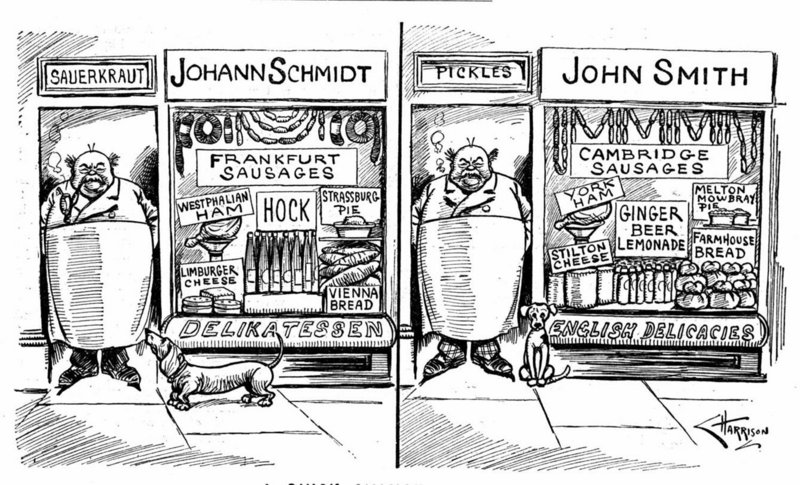
    I like to Google image words to see what picture will pop up. This picture below was the first one for ASSIMILATION which according to Webster means: to bring into conformity with the customs, attitudes, etc., of a group, nation, or the like; adapt or adjust:
    (Granted this is German Assimilation but It gives a basic idea of assimilation in America)


    In class, I'd like to talk about people opinions about how the nun's handled talking to the parents. Did you think it was too much for them to ask the parents to speak English all the time in their own home? I believe it was a little extreme to do so. They can keep their heritage and help their kids learn English all in one. You're not bilingual if you only speak one language. I just think that he was more Americanized than he and his family needed to be.

    Saturday, February 12, 2011

    Amazing Grace, How Sweet The Sound

    This weeks readings were "White Privilege: Unpacking the Invisible Knapsack" by Peggy McIntosh and "Amazing Grace" by Jonathan Kozol.

    REFLECTION:

    I read Amazing Grace first and the first thing I thought about was my trip to the Dominican Republic. The first time I went was in 2006 and then again in 2010. I go with a church group on a mission trip and we split into multiple teams: Two Building teams, Medical team, Teaching Team, Food Team, Evangelism Team, and Water Filtration Building team. This article reminds me so much of this trip. In the article by Kozol, their sanctuary is at this church St. Ann's Church. All around there is violence, drugs, prostitution, and hardships, but at this church there is relief, freedom and redemption.

    At the D.R., my team was a building team and we worked at Elsa's church in a very poor community. The church was fenced in and once we were in we weren't allowed to leave because we were told it was very unsafe outside of the church area. People would come and once inside the gates found safety. It seemed as though a way to escape from the reality of their life around them.


    I believe St. Ann's church also serves the people in a way that nothing else can. It gives them hope. Living in such hard conditions, they have nothing else to rely on but their faith.
    (St. Ann's Church)

    It's also funny that in the book Amazing Grace, this little boy names Cliffie gives her a tour and wants to show him EVERYTHING that is around. Cliffie is so positive even during the most negative areas. In the Dominican, I had a little boy name Bertico that became my best friend and wanted to show me everything that there was where he lived. He was living in a little house probably as big as a decently size bathroom on the property of the church. He had to stay in the house all day while his mother went to work. Someone would unlock the house and let him out and he would then take me all around the property telling me stories and take pictures with me.


    The patch that's on his head is because kids threw a rock at his head. It's amazing to see the conditions that they live in yet they have so much hope and happiness as children. I think that's exactly how Cliffie felt. He saw things that might disturb others (like Cliffie saying he saw someone get shot in the head) yet it didn't affect him at all. That really struck me.


    With the second article, by Peggy McIntosh, I did a lot of thinking. I am very privileged as a white person, yet I don't usually realize it. I tried to find an image that properly explained how "whites" are perceived as being "better" and this is what I found:

    This to me seems accurate in that we might not always assume the worst of a White Person because they are viewed as the upper class, yet this white man is going to get away with being the "gunman" cause he's white! This article made me really think about how I'm really not concerned about not being able to get an education, find a job, live in a nice neighborhood because it's always just happened to me. Is it because I'm white, privileged, or blessed? This article wasn't as interesting as the Amazing Grace one was for me, I could relate to things that I have seen more but this article certainly made me think of how easy life may have been made more me all because of my skin color and where I was born and raised.

    In class, I'd like to discuss what can be done about Mott Haven. The things that are happening I feel like can be changed so easily. Who are we to blame? How can this be fixed? It's also amazing that there is such a place in America. If there is such a place there has go be more in America. How can this cycle of poverty and drug addiction be broken.